The literary periodical The Reviewer was founded in Richmond, Virginia, in 1921 by Emily Tapscott Clark, Hunter Stagg, Mary Dallas Street and Margaret Freeman, and ran for 35 issues until its demise in 1925. Early contributors included H. L. Mencken, James Branch Cabell, Carl Van Vechten and Joseph Hergesheimer (whom Clark dubbed the magazine’s four ‘godfathers’). Clark aimed at promoting the writers of the Southern literary renaissance, the new ‘Southern consciousness’, as she put it. Mencken, the acerbic Baltimore journalist, approved of the periodical’s aims and declared as much in the inaugural issue: ‘The editors know what sort of stuff they need to break down the old Southern tradition and prepare the path for better things’.
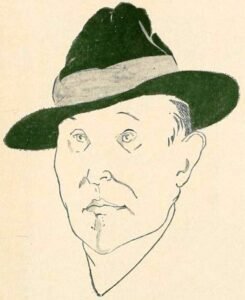
For a writer who had never tried very hard to cultivate a reputation in America, Arthur Machen’s name cropped up surprisingly often. Hunter Stagg, in his article ‘Some Literary Curiosities’, singles out Machen’s The Three Impostors as a work of ‘strangeness and fantasy’ that outperforms Robert Louis Stevenson’s More New Arabian Nights, from which Machen borrowed his book’s structure and caperish energy. ‘Mr Machen’s tales not only deal with the mysterious, but frequently make horrible excursions into the occult, our modern substitute for Afrit and wizard law of old’. In January 1924, Carl Van Vechten reviewed Ornaments in Jade, Machen’s collection of vignettes written in the mid-1890s but not published together until 1924. Characteristically, Van Vechten casts Machen as a hermetic writer whose work can only be fully understood by the initiated: ‘A few readers will divine the orphic secrets; all readers will appreciate the suavity of the prose’. In July of the same year The Reviewer reprinted Machen’s essay ‘The Ten Thousand and One Nights’, which had been written for the Evening News in 1913 to celebrate its 10,000th issue. A copy had been given to The Reviewer by collector Charles Parsons. The fanatical New York businessman and correspondent of Machen’s Frederick Eddy (Clark privately thought him annoying) reviewed The Secret Glory in a 1922 issue.
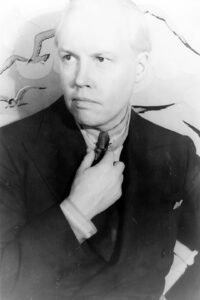
Machen’s star had been rising in America for a number of years. By 1923 his books were commanding high prices at auction houses and his memoirs were being published by the New York firm Alfred A. Knopf. The Reviewer’s chief editor Emily Tapscott Clark, born in Richmond in 1892, did not herself appear particularly interested in Machen’s work at the time, but some of her associates certainly did. Hunter Stagg was particularly enthusiastic and visited Machen in London in the summer of 1923 with Montgomery Evans (‘they seem to have all got very drunk together’, reported Clark). James Branch Cabell was another early admirer, as was Van Vechten. Perhaps inevitably, H. L. Mencken was the odd one out; he considered Machen to be a failure whose revival was unearned, and roasted the Welshman in an article for his own magazine The Smart Set.
Clark also seems to have asked Machen for pieces to publish, as she did with British writers John Galsworthy, Ronald Firbank and Aleister Crowley (who provided an article on Cabell). The Reviewer could not afford to pay its contributors, and so freebies from established authors were seen as a way to lure regional Southern writers into submitting their work without financial reward. It was Frederick Eddy who managed to get Machen to send over his ‘Notes on The Secret Glory’, published as ‘The Treasure of the Humble’ in January 1923. A version of this was later included in Henry Danielson’s Arthur Machen: A Bibliography that same year.
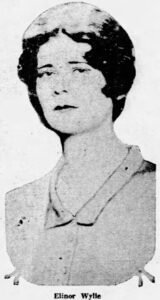
Clark resigned the editorship in 1924 after her marriage to the philanthropic Edwin Balch (who had financed several issues himself), and the journal folded soon after. But this did not end her association with Machen. Clark travelled to London in July 1926 with the poet and notorious beauty Elinor Wylie. Wylie (‘She spent money’, Clark remembered, ‘always, magnificently and inconsiderately’) darted about the city paying calls to notable writers of the day, including Virginia Woolf. One of these writers was Machen, who Wylie visited ‘unintroduced’ at his home in St John’s Wood to drink his famed Dog and Duck punch. Clark seems not to have been present on this occasion, for her brief account of Wylie’s visit is written in the third person (unlike their earlier meeting with Walter de la Mare), but she may have called in later years — Machen certainly mentions her visiting in summer 1938. Clark wrote about the London trip, and her experiences of editing The Reviewer in her book of anecdotes Innocence Abroad (1931); it included reminiscences of old friends such as Carl Van Vechten, whom she used to meet for lunch at the Algonquin Hotel, New York. She sent a copy to Machen, who read it with interest: ‘Most entertaining; but I don’t think I should have been at ease in the little circle at the Algonquin’.
Sources referred to:
Ingenue Among the Lions: The Letters of Emily Clark to Joseph Hergesheimer (Austin: University of Texas Press, 1965).
Emily Clark, Innocence Abroad (New York: Alfred A. Knopf, 1931). Available online.
The Reviewer, volumes 1-4. Available online.
James Branch Cabell website, the Virginia Commonwealth University.